
If you’re in Rugby, or surrounding areas, you may have found yourself unusually pleased to see the rain today.
After such a long period of dry weather, a few hours of rain might not be enough to end the drought, but it could be enough to start changing the appearance of our gardens.
Over the next few days, take a look around your garden. Some plants should respond remarkably quickly, while others may take considerably longer. And one of the biggest changes could happen to something that currently looks beyond saving: your lawn.
Why has the grass suffered so badly?
Across Rugby, we’ve seen lawns turn from green to yellow and eventually almost completely brown.
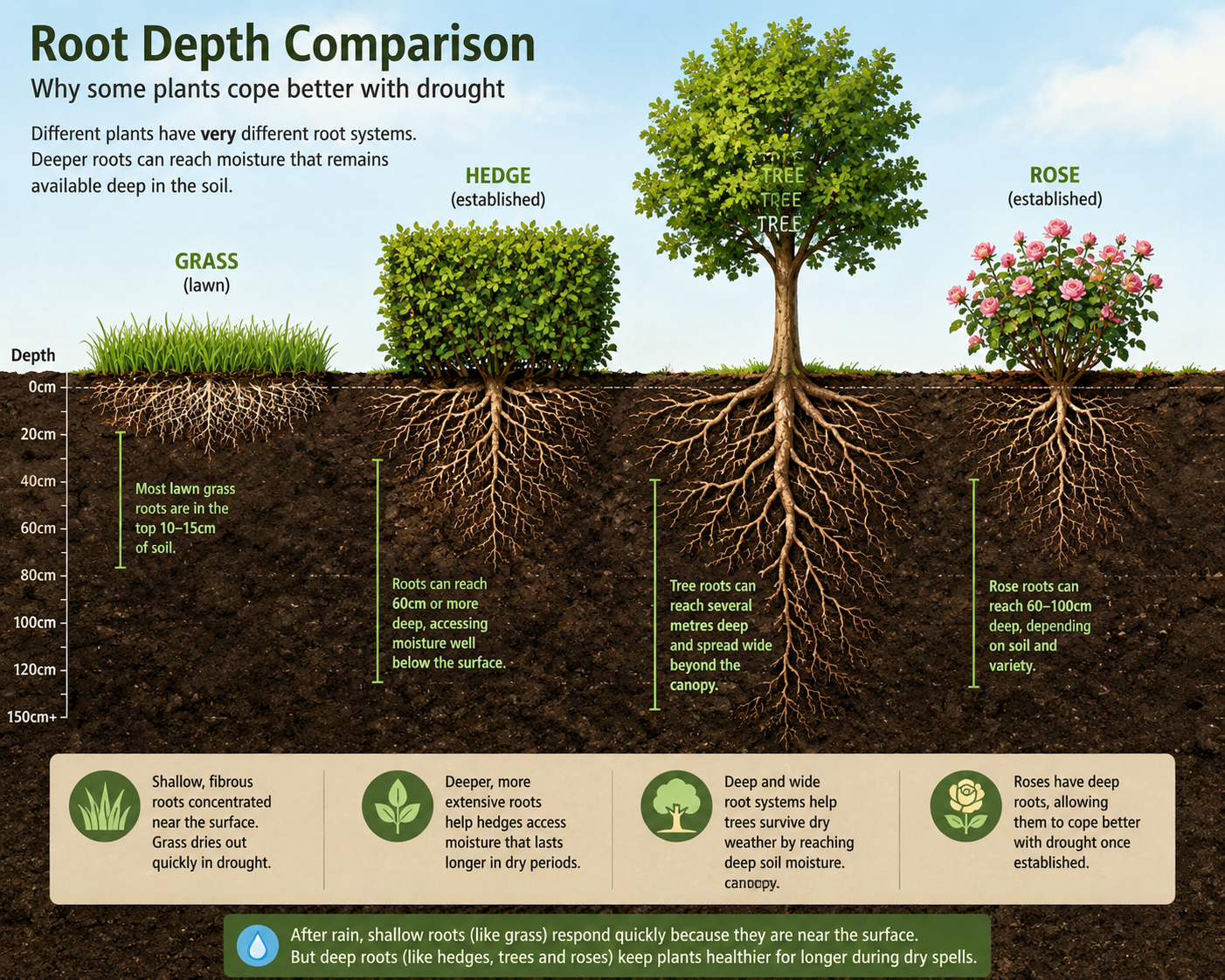
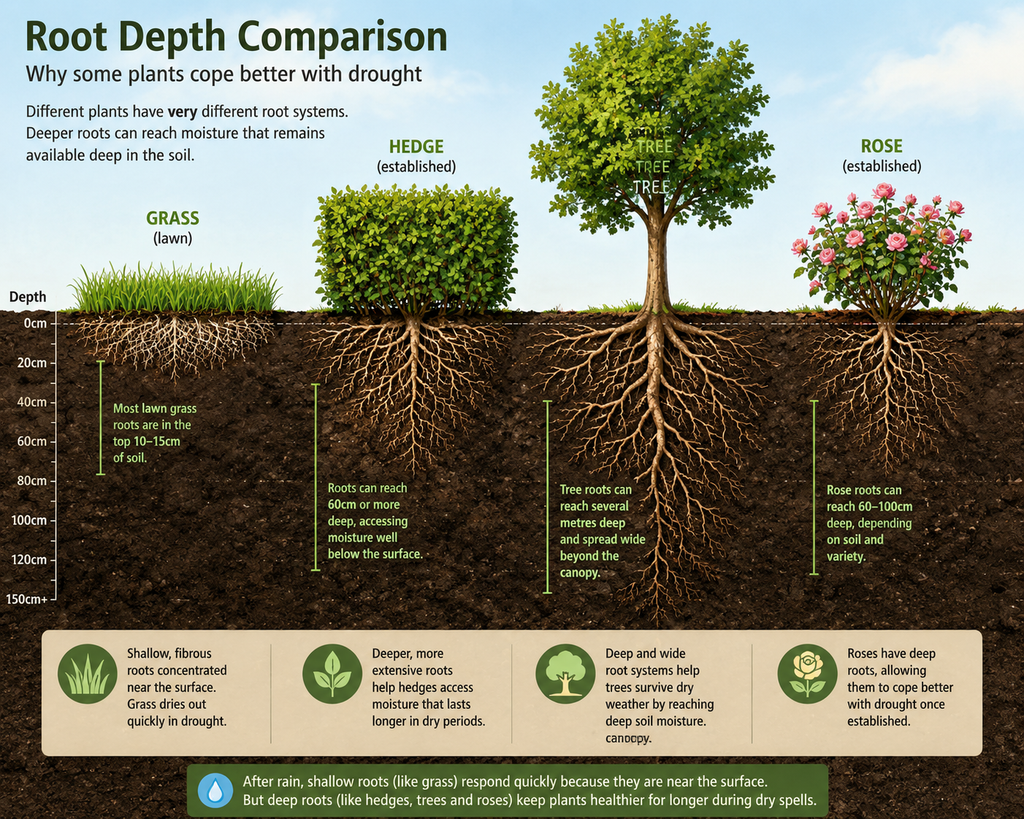
Grass is often one of the first things in a garden to show drought stress because most lawn grasses have a relatively shallow, fibrous root system. This means they rely heavily on moisture in the upper layers of soil.
Trees, established shrubs and many perennial plants can have roots extending much further into the soil, where moisture can remain available long after the surface has dried.
Grass doesn’t usually have that luxury.
There is another factor too: mowing.
Regularly cutting a lawn very short can encourage shallower rooting. Longer grass shades the soil, reduces evaporation and encourages roots to grow deeper. That’s one reason lawns that have been left slightly longer may have coped better with this summer’s dry conditions.
Brown doesn’t necessarily mean dead
Here’s the interesting part.
That brown lawn may look dead, but much of it probably isn’t.
During prolonged dry weather, established lawn grasses can effectively shut down their above-ground growth. The leaves turn brown, growth stops and the plant concentrates on surviving at root and crown level.
Once enough moisture returns, those surviving plants can begin producing green leaves again.
So don’t be surprised if some of Rugby’s brown lawns start developing a green haze following sustained rainfall.
The transformation won’t necessarily happen overnight. Depending on how severely the lawn has been affected and whether we continue to receive rain, noticeable green growth may take a week or two.
Which plants might respond first?
Grass
Ironically, despite being one of the most visibly affected parts of the garden, established grass could produce one of the most noticeable recoveries.
Its shallow roots made it vulnerable when the surface soil dried out, but the same position means those roots are among the first to benefit when rain begins rewetting the upper soil.
If the roots and crowns have survived, new green growth can follow surprisingly quickly.
Herbaceous perennials
Some perennial plants may also surprise you.
Plants that have wilted, lost leaves or partially died back aren’t necessarily dead below ground. Many perennials store energy in their roots, crowns or underground stems and can temporarily sacrifice their foliage during difficult conditions.
Once moisture becomes available again, surviving plants can start producing fresh growth.
Established shrubs
Shrubs may not give us quite such an immediate transformation.
Their deeper, larger root systems often helped them survive the drought better in the first place. Where leaves have wilted rather than actually died, however, they may become noticeably firmer as the plant’s water supply improves.
Don’t expect brown or scorched leaves to suddenly become green again. Once that tissue is dead, it’s dead. What we’re looking for is healthier remaining foliage and, eventually, fresh growth.
Trees
Mature, established trees generally have much larger root systems and access to moisture deeper in the soil, so many have been able to cope better than lawns and smaller plants.
However, young and recently planted trees are a very different story.
Their roots haven’t yet spread far into the surrounding soil, making them much more vulnerable to prolonged drought. Today’s rain will certainly help, but a few hours of rain may not penetrate deeply enough to replenish the entire root zone.
And what won’t recover so easily?
Rain isn’t a reset button.
A wilted leaf can recover because its cells have simply lost water.
A brown, crispy leaf cannot.
Likewise, if drought has killed the crown, roots or stems of a plant, rainfall won’t bring those tissues back to life.
The important thing is therefore not how bad the plant looks today, but whether its growing points and root system are still alive.
Give apparently damaged plants some time before deciding they’ve been lost.
Why one day of rain isn’t enough
After a prolonged drought, soil can become extremely dry and hard. Heavy rain can initially run across the surface rather than soaking deeply into it.
A few wet hours can therefore make the garden look thoroughly watered while the soil several centimetres below remains surprisingly dry.
What our gardens really need isn’t one spectacular downpour.
They need repeated periods of steady rainfall that gradually replenish moisture deeper in the soil.
And fortunately, we’re reaching the point of the year when cooler temperatures, longer nights and lower evaporation rates mean that every millimetre of rain can start going further.
Watch your garden this week
This could actually be a fascinating little gardening experiment.
Take a photograph of your lawn and borders today, just after the rain.
Then take another photograph in three days.
And another after seven days.
Which plants respond first?
Which ones don’t change?
And how quickly does your brown lawn begin turning green?
After weeks of watching our gardens struggle with the drought, we may finally get to watch some of them doing the opposite.
The recovery has begun – now we just need the rain to keep coming.